Table Of Content

Think about what length you want before you shop for the right sew-in extensions. Keep in mind that we may receive a commission when you click on our links and make a purchase. We do our best to keep things fair and balanced to help you make the best choice for you. You’ll see white flakes at the hair root, which means it has been adversely pulled. Your go-to source for manicure inspiration, favorite makeup finds, and expert advice to elevate your beauty journey. Sleeping on wet hair can cause your hair to become tangled and matted, which can lead to breakage.
Our Expert Educators
More permanent methods like fusion cost $600 to $3,000 but look more realistic. No, sew-in hair extensions do not cause any damage to your hair if they’re applied properly by a professional who’s well-trained. Earlier on, we discussed that sew-in hair extensions are pretty reasonable and cheap when compared to other types of hair extensions. Since everyone has a different definition of this word, let’s go on to calculate how much it would cost you to get sew-in hair extensions. After that, hair extensions are sewn into that cornrow directly, with the standard sewing method with the help of a thread and needle.
Clip-In vs. Professional: Which Hair Extensions...
Beloved largely for their ease, practicality, and affordability, clip-ins are the go-to hair extensions for those looking for a quick switch-up at home. Nash suggests washing from your ends to your roots, using a wide-tooth comb or a paddle brush to distribute the product. If you’re showing your sew-in love and taking proper care of it—more on that in a bit—it’ll last up to six to eight weeks, says Nash. If you try to keep it in longer than that, you’re risking damage to your hair and scalp (aka irritation, excess oil buildup, and breakage).
Sew-In Hairstyles to Show Your Stylist ASAP
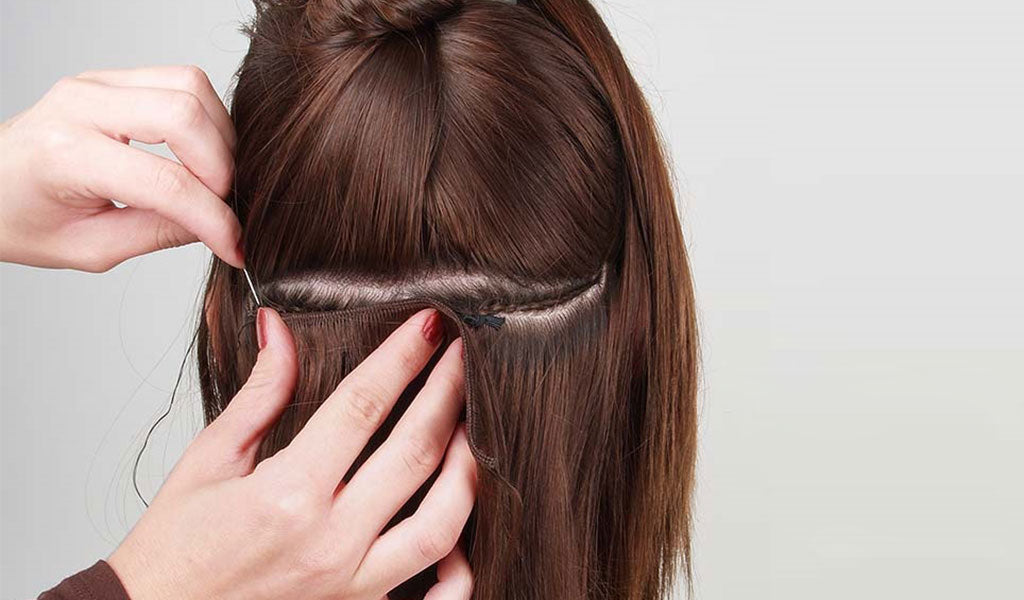
Try to avoid exposing extensions to excessive moisture and heat, which may make them frizzy or tangled. When it comes to sew-in hair extensions, usually one pack is enough for full head coverage. On the other hand, other types of hair extensions usually require a lot of packs for full-head coverage. Sew-in hair extensions also called weave hair extensions, are more complicated than the other variety of hair extensions like tape-in hair extensions and clip-in hair extensions. In order to get sew-in hair extensions, first, a cornrow is made on both sides of your head, starting from behind the ear. This cornrow is made horizontally towards the middle of the back of the head, until the cornrows from each side meet.
However, the installation process may differ slightly depending on the thickness of the natural hair, as more wefts may need to be used for thicker hair. Many people love this hair extension method because they are generally more secure than others. "Wearing extensions requires you to treat it like your own real hair," explains stylist Yene Damtew.
Hard to Wash
For sew-in extensions, your natural hair is braided down to the scalp in cornrows. But a portion of hair is left out to cover the tracks at the top, commonly referred to as leave out. Tracks of hair are then hand-sewn onto the braids, leaving most of the natural hair completely concealed. Sometimes a small amount of hair is also left out around the perimeter for a more seamless install.
Sew-in Hair Extensions 101: The Installation Process
How Do Hair Extensions Work? - InStyle
How Do Hair Extensions Work?.
Posted: Tue, 23 Jan 2024 08:00:00 GMT [source]
If your hair grows faster than average, you’ll have to visit the salon more often to move the extensions closer to your roots. Cold fusion extensions, also known as micro links or i-tips, use an ultrasound applicator to bond the extensions to your hair instead of heat. This is a gentler method but costs about the same as normal fusion extensions.
Hairstyle and Hair Color Inspo
Continue attaching strands of extensions until you reach the other side of your head, making sure not to overlap each section (this will cause it bunch up). Here are some tips on how to keep your sew-in hair extensions looking their best. Thick hair melds with sew-in extensions because they’re dense enough to hold the additional weight of the hair bundles.
Length also plays a key factor, as longer extensions typically have shorter wefts. Edgehill explains that styles 26 inches or longer will likely need three to five bundles to achieve fullness. To be fair, your lifestyle and daily activities are always major factors when choosing a new hairstyle.
These are not the extensions that keep you visiting the salon often and spending chunks of money. Additionally, remember that applying high heat to your hair can make it brittle. So it’s best to use a low to medium heat setting when styling your hair, preferably between 250°F and 350°F. It’s very important to keep your scalp clean and moisturized when you have a sewn-in hair weave.
So, always make sure to deep condition your sew-ins at least once a week. When you sleep, especially with extensions on, they can get damaged. This can mean loss of moisture (resulting in dryness and frizz), tangling and knotting and also breakage. So, if you’re intrigued to know what exactly sewn-in extensions are, tips on how to care for them and more, then check out all the details below. This is not the kind of attachment clip-ins or micro-ring extensions have. It’s a sturdy and firm hold that does not allow the hairpieces to go down easily.


No comments:
Post a Comment